
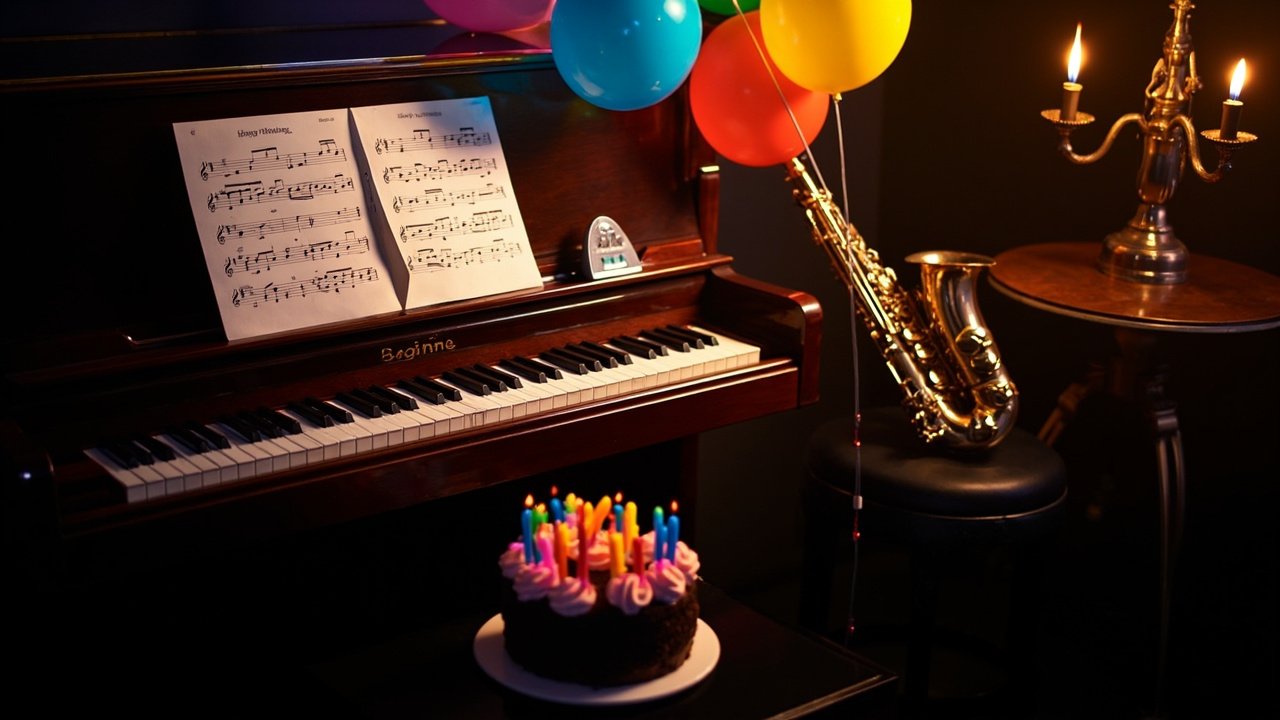
Did you know the iconic ‘Happy Birthday’ song was only declared public domain in 2025 after a century of legal battles? This simple melody holds more history than your average birthday cake and serves as the perfect gateway to piano mastery. For beginner pianists, learning versatile arrangements of this universal tune transforms you from a party guest into the celebration’s highlight. Discover how mastering classical, jazz, blues, and boogie-woogie versions can equip you with essential skills while making you the most memorable person at any gathering.
【Introduction: Why This Song Matters More Than Cake】
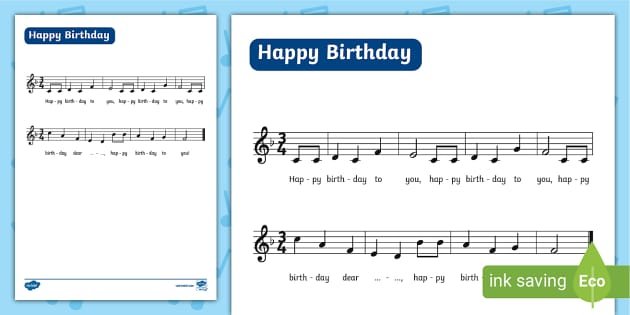
The Universal Birthday Ritual
A Song With Surprisingly Messy Origins
- The story goes that in 1893, a couple of kindergarten teachers, Patty and Mildred Hill, were just trying to get a room full of small children to say “good morning” without throwing paste at each other. They wrote a little ditty called “Good Morning to All.” It was pleasant, simple, and probably involved a lot of clapping. Then, as if by some collective, unspoken agreement, the children of America—and eventually the world—decided the lyrics were boring and swapped them out for a birthday message. It was the first and most successful case of lyrical remixing in history. The tune remained, but the purpose was utterly transformed, like using a shoe to hammer a nail.
- This mysterious transition from a classroom greeting to the global birthday anthem happened organically, without a marketing team or a viral social media campaign. It just… spread, proving that the best ideas are often the ones nobody thinks to copyright until it’s far, far too late.
- And oh, the copyright battles. The Hill sisters’ publisher, and later a company called Summy Co., spent decades trying to claim ownership of a song that had already escaped into the wild, like a cat that learned to open doors. The legal tussles were so convoluted and fierce, they would indeed make a lawyer blush, or at least charge a higher hourly rate. It wasn’t until 2025 that the song was definitively and universally recognized as public domain, freeing us all to sing it off-key without fear of a lawsuit.
Why Every Pianist Needs This in Their Arsenal
- Let’s talk cold, hard statistics. A significant plurality of the world’s population is born between July and September. This isn’t a fun fact; it’s a strategic imperative. For nearly nine months of the year, you are living in the calm before the storm. But from summer through early fall, you are on the front lines of a perpetual birthday war. Your social calendar will be a gauntlet of parties, and showing up empty-handed is a rookie move.
- This is your “Marilyn Monroe for JFK” moment. Think about it. She didn’t just walk up and say “Happy Birthday.” She performed it. She created a cultural touchstone out of a simple tune. While you may not be breathing heavily into a microphone while wearing a skin-tight dress (unless that’s your thing, no judgment), your rendition at the piano is your chance to transform a mundane ritual into a personal, memorable event. You are not just playing notes; you are creating a vibe.
- Ultimately, this is your ticket out of social obscurity. Instead of being the person who awkwardly lingers by the veggie platter or, worse, volunteers for clean-up duty just to have something to do with their hands, you can be the hero. The one who gathered everyone for the song. The one who provided the soundtrack to the candle-blowing wish. The party doesn’t truly start until someone sits down at the keyboard. Don’t you want that someone to be you?
【The Ultimate Top 10 List】
Alright, you’ve learned how to read the angry ants on the clotheslines without weeping. You’ve accepted that your thumb is not the enemy. Now for the fun part: actually picking a piece of music that won’t make you regret this entire endeavor. Think of this list as a menu. You wouldn’t start with a five-alarm chili; you’d start with some mild, comforting mashed potatoes. We begin with the musical equivalent of mashed potatoes.
Category 1: Absolute Beginner Friendly
This is for when you look at the keyboard and your brain screams, “That’s too many white things!” We start simple.
#10: Single-Note Melody Version
This is the pure, unadulterated essence of “Happy Birthday.” It’s the musical seed from which your mighty piano oak will grow. You will use exactly five notes. Your right hand will do all the work, plinking out the familiar tune one key at a time, while your left hand gets to take a well-deserved nap on the bench. This version is perfect for your first week, when the primary goal is to not accidentally play a note with your nose. It builds the one thing you need most: the confidence to press a key and have the correct sound come out.
#9: Basic Chord Accompaniment
So you’ve mastered the one-note wonder and you’re feeling bold. This arrangement is the gateway drug to sounding like you actually know what you’re doing. It introduces you to the holy trinity of beginner chords: C, F, and G. Your right hand still plays the melody, but now your left hand wakes up from its nap to play these simple, three-note triads at key moments. The left-hand patterns are designed to feel natural, like a gentle, rhythmic heartbeat beneath the tune. This is where you stop being a melody machine and start becoming a musician. It’s a thrilling, slightly terrifying step.
Category 2: Style Explorations for Beginners
You can play the tune. You can even add a chord. Now let’s give it a personality, without requiring a personality disorder to learn it.
#8: Classical Variation (Beginner Level)
This arrangement lets you pretend you’re Mozart, just for a minute, without having to wear a wig. It takes the simple melody and adds a few tasteful, simplified embellishments—a little trill here, a graceful turn there. It maintains a classical feel without demanding the technical prowess of a concert pianist. It’s the perfect piece for impressing grandparents, who will squint, smile, and say, “It sounds so… educated.”
#7: Blues Basics Arrangement
Time to get a little sad, but in a fun way. This version takes the “Happy Birthday” tune and forces it into a 12-bar blues structure, which is like teaching a golden retriever to walk on its hind legs—it’s charming because it’s slightly wrong, but it works. You’ll be introduced to the glorious, soulful sound of seventh chords. The best part? This style has built-in room for error. Hit a “wrong” note? Hold it, bend it, call it jazz. It’s the most forgiving style for the creatively brave.
#6: Jazz Introduction
This is for when you want to look cool without breaking a sweat. It teaches you a gentle swing rhythm—think of it as a lazy, confident walk instead of a military march. You’ll learn a few basic extended chords like G7 and Cmaj7, which are just your normal chords with an extra note added for color, like a pocket square on a suit. The cool factor is maximum; the difficulty is deliberately kept to a minimum.
#5: Boogie Woogie Light
The goal here is to make people want to dance, not to give yourself a repetitive stress injury. A full boogie-woogie left-hand pattern is a frantic, relentless beast. This “Light” version gives you a simplified, skeletal left-hand pattern that still captures that infectious, danceable energy. The primary challenge, and the key practice technique, is hand independence: teaching your left hand to keep its steady “oom-pah” rhythm while your right hand casually sings the melody over the top.
#4: Bossa Nova Simplified
Want to instantly transport everyone from a stuffy living room to a breezy Brazilian beach? This is your ticket. The characteristic Bossa Nova rhythm can look like a complex mathematical formula on the page. This simplified version breaks it down into its core components, giving you the basic, essential chord progression and a rhythm you can actually count without using all your fingers and toes. It creates an atmosphere of sophisticated relaxation, and you get to be the source of it.
Category 3: The “I Can’t Believe I’m Playing This” Selections
These are the arrangements you work up to. The ones that make you pause, listen to what you’re actually producing, and think, “Did I just make that sound?”
#3: Classical-Intermediate Crossover
This is where you level up from “Mozart with training wheels” to “Mozart with just the kickstand down.” It features more elaborate right-hand patterns, with scales and arpeggios weaving around the melody. It also introduces you to the power of dynamic variation—playing some sections loud (forte) and others soft (piano). This is the piece that sounds significantly more difficult and expressive than it actually is to play, which is the entire point of this whole operation.
#2: Jazz-Blues Fusion
This arrangement is a best-of-both-worlds scenario. It takes the soulful chords of the blues and marries them to the sophisticated rhythms of jazz. It might introduce you to the concept of a “walking bass” in the left hand—a steady, melodic bass line that walks up and down scales, giving the piece a propulsive, forward momentum. This is the perfect piece for showing off the new skills you’ve accumulated. It says, “I don’t just play ‘Happy Birthday’; I interpret it.”
#1: The Ultimate Beginner Showstopper
This is the grand finale. The pièce de résistance. This arrangement is a carefully engineered marvel that combines little touches from all the previous styles—a classical run here, a bluesy note there, a jazzy chord change, a dynamic shift from loud to soft. It’s designed to be accessible but dramatic, creating a musical journey in the space of twenty seconds. This is the piece that makes people stop chewing their cake and say, “Wait, you learned that?” And you’ll be able to shrug and say, “It was in the top ten list.”
【Finding Your Perfect Match: The Style Spectrum】
So, you’ve decided to arm yourself with the birthday anthem. A wise choice. But which version? Strolling up to the piano and hammering out the same blocky chords everyone learned in third grade is like showing up to a black-tie event in a novelty t-shirt. It gets the message across, but it lacks… panache. The beauty of this simple tune is that it’s a blank canvas, ready to be painted in any style you can imagine. Let’s explore the spectrum.
Classical: When You Want to Sound Fancy
What Makes Classical Classical
Imagine a powdered wig. Not on your head, necessarily, but in your soul. The Classical era was all about ditching the ornate, frilly chaos of the Baroque and replacing it with elegance, balance, and clear, singable melodies. It was the musical equivalent of Marie Kondo coming in and tidying up. If you play a Classical-style “Happy Birthday,” you are telling the room, “I am not merely wishing you a happy day; I am bestowing upon you a well-structured and emotionally balanced musical offering.” Composers like Mozart, Haydn, and an early, less-grumpy Beethoven would approve of this approach. They understood that the drama isn’t in volume, but in the subtle art of dynamics (loud/soft) and phrasing (musical sentences). A perfectly placed crescendo as you approach the name of the birthday person is more powerful than a confetti cannon.
Beginner-Friendly Classical Elements
Fear not the wig. A Classical arrangement for beginners isn’t a concerto. It relies on simplified chord structures—often just clear triads in the left hand—that provide a stately foundation without requiring your fingers to perform acrobatics. This is where a tool like Tomplay’s adjustable tempo feature becomes your best friend. You can slow the whole thing down to a dignified crawl, master the notes without pressure, and then gradually speed up to a sprightly allegro. The secret? It’s all in the articulation. Playing the notes with a light, detached touch (staccato) in the melody and holding the bass notes (tenuto) instantly makes you sound like you know what you’re doing, even if you’re just thinking about what kind of cake you’ll get.
Blues: For the Friend Who’s Deep
The “Blue Devils” Origin Story
Maybe the birthday person is turning 40. Or their pet iguana just ran away. Or they simply appreciate the profound truth that happiness hits harder when you’ve acknowledged a little sadness. The Blues is perfect for this. Born from African spirituals and work songs in the Deep South, it’s a genre built on expressing feeling. It’s mathematically beautiful in its most common form: the 12-bar blues, a repeating cycle of chords that is as reliable as the sun rising. There’s a reason sadness sounds so good at a happy occasion—it adds depth, a touch of “we’ve been through stuff, but today we eat cake,” and makes the celebration feel earned.
Blues Techniques Even Beginners Can Master
The core of the blues is the call-and-response pattern. The right hand (the call) plays a little melodic phrase, and the left hand (the response) answers with a chord. It’s a conversation you have with yourself. The chords you need are simple, often just three primary chords (I, IV, V) that use a bluesy, slightly sour-sounding flavor called a “seventh.” They look more intimidating on the page than they feel under your fingers. As for improvising, start with the blues scale. It’s a set of just six notes that all sound good together. Play any of them, in any order, in time with the music. It’s musical Mad Libs, and you cannot lose.
Jazz: For the Sophisticated Celebration
The Impossible-to-Define Genre
Jazz is the guest who shows up to the party wearing something unexpected but fabulous, and then explains the history of each fabric in a way that’s fascinating, not pretentious. It was born from a cultural cocktail in New Orleans—a mix of ragtime, blues, brass bands, and spirituals. It is, fundamentally, American music. And the best part? No one can agree on what “real” jazz is, which gives you, the beginner, immense freedom. Is it swing? Is it bebop? Is it the cool, detached style of the West Coast? Yes. Arguing about it is half the fun.
Jazz Fundamentals for Nervous Newbies
The word “improvisation” can trigger a panic attack, but in a beginner’s context, it just means “slightly embellishing the melody.” Instead of playing the plain note, you play a few notes around it. Syncopation—the art of emphasizing the off-beats—is the engine of jazz rhythm. It’s the difference between saying “HAP-py BIRTH-day” and “ha-PPY birth-DAY.” It feels awkward at first, like trying to pat your head and rub your stomach, but once it clicks, you instantly sound 300% cooler. The goal isn’t to be Coltrane; it’s to add a little swing, a little swagger, to make “Happy Birthday” sound like it’s strolling down a city street in a snazzy hat.
Boogie Woogie: For the Dance Party Birthday
The Railroad Rhythm Connection
If the birthday person’s primary requirement is that people get out of their chairs, this is your style. Boogie Woogie erupted from African American communities in Texas, its name possibly derived from West African linguistic roots. It’s the sound of a party getting started. The most enduring theory is that its driving, repetitive bass line was meant to mimic the chugging of a steam locomotive. This relentless, joyful energy would later become the direct ancestor of rock and roll. It is fundamentally incapable of being sad.
Left Hand Magic for Right-Handed People
Here’s the secret: in Boogie Woogie, the left hand does 90% of the work. It plays a repeating, rhythmic bass pattern (an “ostinato”) that sets the entire foundation. Your right hand is basically just along for the ride, playing a simple, often very repetitive, melodic riff on top. This is great news for the coordination-challenged because you can practice your left hand until it’s on autopilot. The rhythm is everything; the melody is almost an afterthought. If you can get that left hand pumping, you can create a wave of energy that will have people lining up for a slice of cake as if they’re boarding the last train out of town.
Bossa Nova: For the Chill Celebration
The “New Trend” from Rio
Not every birthday calls for a dance-off. Some call for a sophisticated murmur of conversation and the clinking of wine glasses. For these, you need Bossa Nova. Meaning “new trend,” it emerged in the relaxed, upper-middle-class apartments of 1950s Rio de Janeiro, a smoother, more complex cousin of the samba. It was a revolution in cool. The genre was launched onto the world stage by the 1964 album Getz/Gilberto, a record so effortlessly stylish it sold over two million copies in a year and made everyone wish they were sipping a caipirinha on a Copacabana beach.
Bossa Nova’s Beginner-Friendly Nature
Bossa Nova is the holy grail for beginners: it sounds incredibly complex and hip, but the piano lines are often very accessible. The left hand plays soft, syncopated chords, while the right hand picks out a gentle, melodic line. It lives in the sweet spot between “easy to learn” and “impressive to hear.” You don’t need technical wizardry; you just need a feel for its relaxed, lilting rhythm. It’s all about creating an atmosphere, a vibe of effortless cool that says, “The celebration is underway, and it is deeply, profoundly chill.”




No comment