

Did you know that over 80% of beginner violinists who start with appropriately leveled music develop better technique and maintain motivation? Choosing the right beginner violin sheet music is not just about playing notes—it’s about building a solid technical foundation while experiencing the joy of creating beautiful, recognizable music from your very first lessons. This strategic approach prevents frustration, develops proper bow control and finger placement through carefully sequenced pieces, and transforms practice from a technical exercise into a deeply rewarding musical conversation that keeps you inspired.
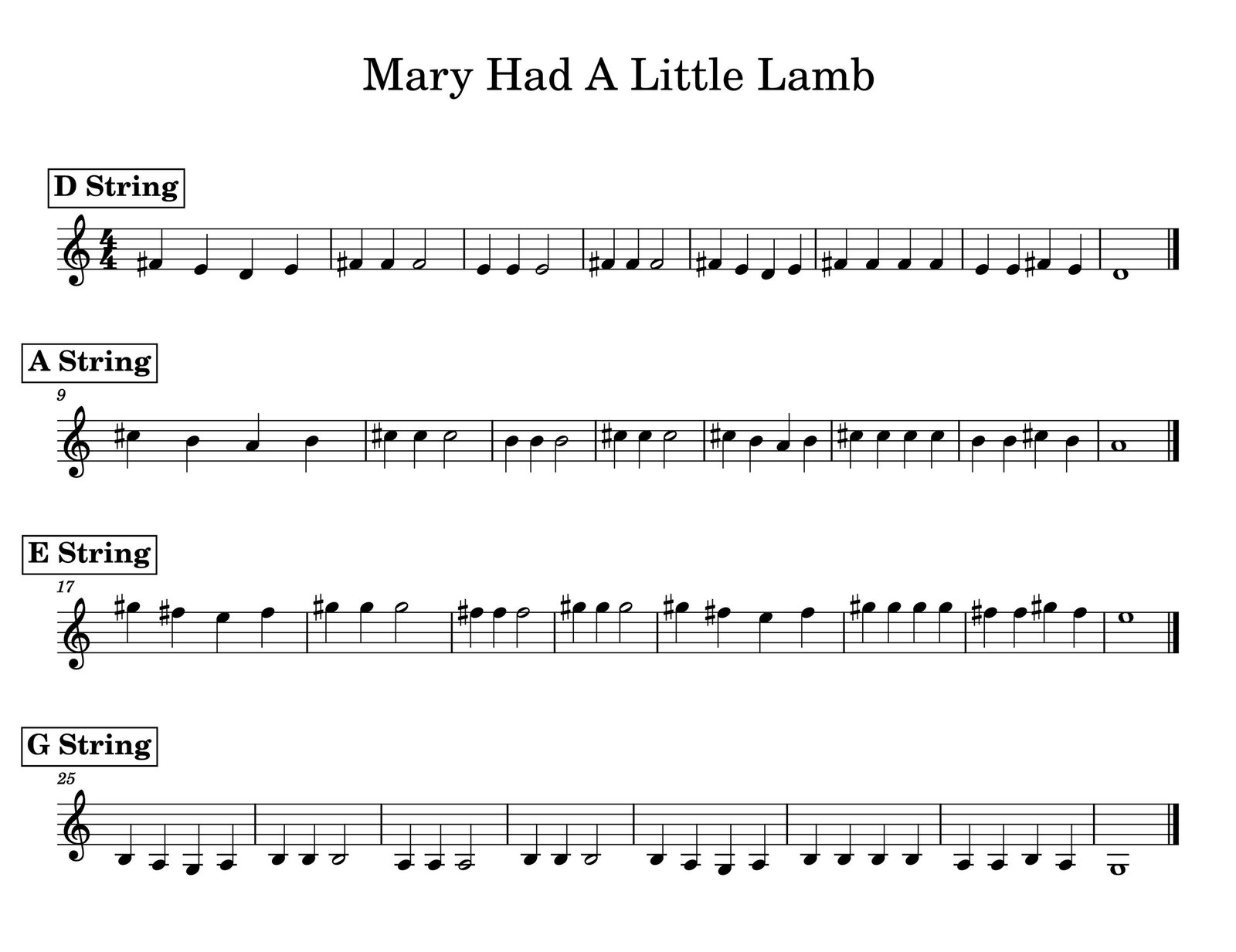
Why Starting with the Right Music Matters
The Foundation of Violin Learning
When you choose the right sheet music from the very beginning, you are doing more than just learning to play songs; you are building the proper technique from the first note. Pieces written for beginners are designed to introduce specific skills—like bow control, finger placement, and simple rhythms—in a logical and manageable sequence. This careful approach helps you develop confidence through achievable pieces, preventing the frustration that comes from attempting music that is too advanced. Each small success builds upon the last, making it easier to establish good practice habits early. You learn that consistent, focused practice on the right material yields real, audible progress, setting a positive pattern for your entire musical journey.
The Joy of Playing Recognizable Melodies
There is a unique and powerful motivation that comes from being able to play a tune you already know and love. Connecting with familiar tunes accelerates learning because your ear already understands how the melody should sound, guiding your fingers and bow. This connection transforms practice from a technical exercise into a musical conversation. Maintaining motivation through musical satisfaction becomes natural when you can hear yourself bringing a beloved melody to life. Furthermore, this joy is multiplied when you share your progress with friends and family. Playing “Twinkle, Twinkle, Little Star” or “Ode to Joy” for someone and seeing them recognize it is an incredibly rewarding experience that fuels the desire to keep learning.
【Essential Foundations for Beginner Violinists】
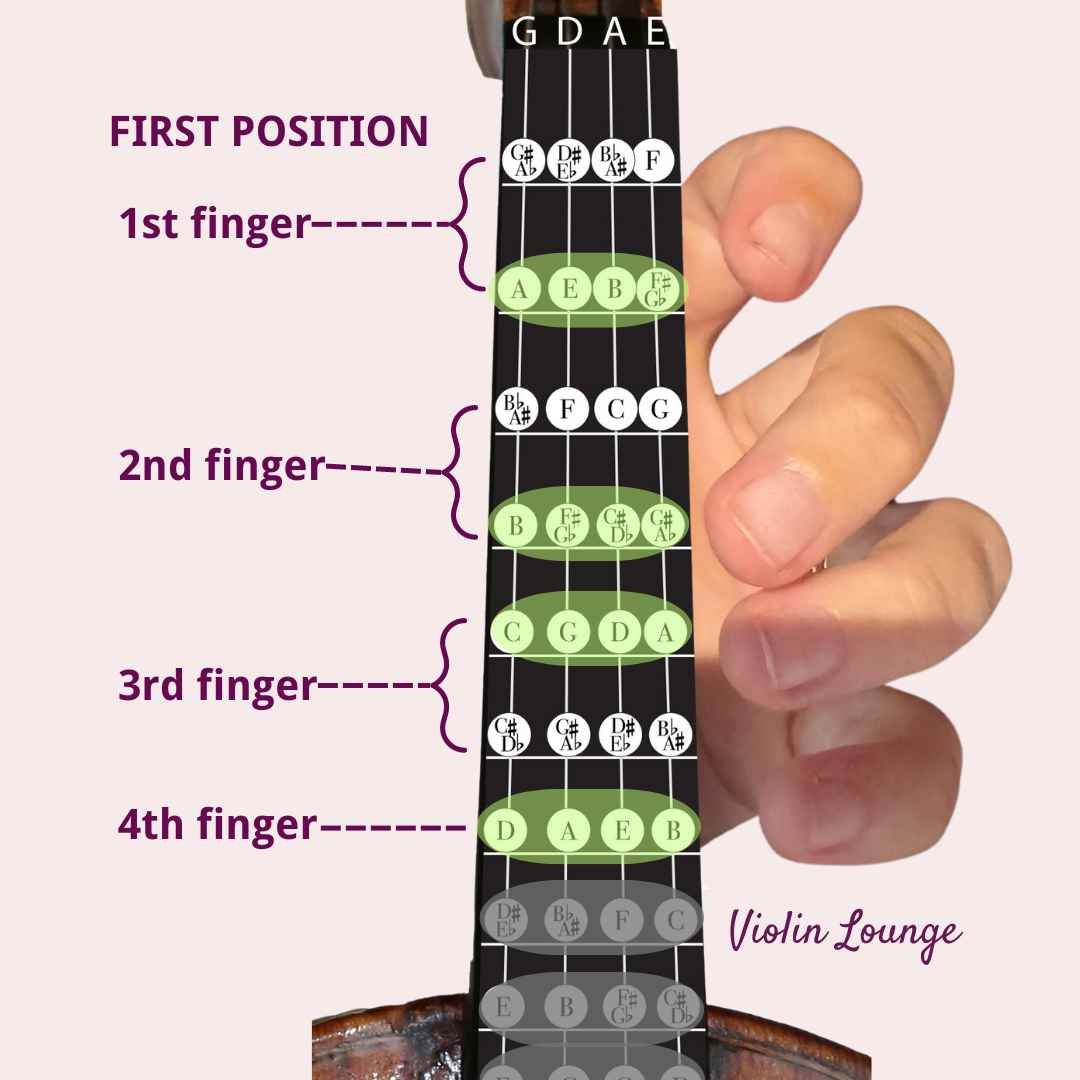
Understanding Your First Position Notes
Let’s get comfortable with the violin’s “home base,” which is the first position. This is where your left hand will live for a good while, and getting to know it is like learning the layout of your own kitchen—once you know where everything is, you can start cooking up some beautiful music without having to think too hard about it.
The Standard Finger Pattern Explained
The magic of the violin is that the same simple pattern of fingers applies to each string. Once you learn it on one string, you’ve essentially learned it on all four. This pattern is built on the relationship between whole steps and half steps.
- Whole steps between 1st and 2nd fingers: Place your first finger down on a string. Your second finger goes down a comfortable space away, leaving a gap. On the A string, for example, your first finger plays B, and your second finger plays C#.
- Half steps between 2nd and 3rd fingers: Now, your third finger snuggles up very close to your second finger—they should be touching. This is a half step. On the A string, your third finger plays D.
- Consistent finger placement across all strings: This whole-step, whole-step, half-step pattern (from the open string) is the same for the D, A, and E strings. The G string is the only one that sometimes changes, often requiring a low second finger, which your teacher will guide you on. For now, focus on the consistency of the other three strings.
Reading Violin Sheet Music Basics
Looking at sheet music can feel like deciphering a secret code, but we can break it down into friendly, manageable parts. You don’t need to learn everything at once.
- Note names and finger numbers correlation: In beginner music, you’ll often see little numbers next to the notes. These are finger numbers! A “0” means play the open string (no fingers down). A “1” means your first finger, and so on. This directly connects what you see on the page to what your fingers need to do.
- Key signature recognition for beginners: At the very beginning of the staff, right after the clef, you might see some sharps (#) or flats (b). For your first pieces, you’ll mostly be in the keys of G Major (which has one F#) or D Major (which has F# and C#). Don’t worry about the theory just yet; just remember that whenever you see an F or a C in the music, you’ll need to play F# or C# instead.
- Rhythm patterns in common time signatures: Most beginner songs are in 4/4 time (four beats per measure) or 3/4 time (three beats per measure). Start by clapping the rhythm of a new piece before you even pick up your violin. Count out loud: “1, 2, 3, 4” for quarter notes, and “1-and, 2-and” for eighth notes.
Building Your Practice Routine
Think of your practice not as a chore, but as a daily conversation with your violin. Short, consistent, and focused sessions are far more valuable than long, infrequent, and frustrated ones.
Effective Practice Strategies for Beginners
- Starting with pizzicato (plucking) for left-hand focus: Before you even bring the bow into the picture, try plucking the strings with your right index finger (this is called pizzicato). This allows you to concentrate entirely on getting your left-hand fingers in the right place, pressing down firmly, and learning the tune without the added complexity of the bow.
- Using a metronome for rhythm development: A metronome is your best friend for developing a steady internal pulse. Start slow—painfully slow, if needed. The goal is to play the piece perfectly in time with the clicks, not to race through it. This builds solid rhythmic foundations from day one.
- Slow practice with gradual tempo increases: This is the golden rule. Master a difficult passage at a very slow tempo where you can play it without mistakes. Only when it feels easy and accurate should you slightly increase the metronome’s speed. This method of “slow, then flow” is how you build muscle memory and confidence.
Common Beginner Challenges and Solutions
Every single violinist has faced these hurdles. You are not alone, and they are absolutely surmountable.
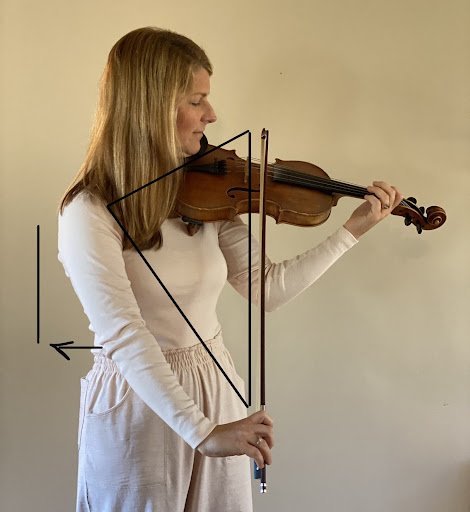
- Bow control and straight bowing techniques: A wobbly bow is perfectly normal at first! Practice drawing your bow in a straight line, parallel to the bridge, on an open string. Watch yourself in a mirror. The goal is to train your arm to feel what a straight bow feels like. Do this for a minute or two at the start of every practice session.
- Intonation development through scale practice: Intonation (playing in tune) is a lifelong pursuit, but it starts simply. Play a one-octave G Major scale every day, very slowly. Listen carefully to the sound. Does it match a reference note from a tuner or a piano? Does the pattern sound right? Your ear is your most important tool here.
- Building finger strength and dexterity: Your left-hand fingers will feel weak and uncoordinated at first. This is normal! Simple exercises like placing your fingers down one at a time on a string (1, then 1-2, then 1-2-3, etc.) and then lifting them in reverse order will build strength and independence. A little bit of this daily goes a long way.
As you build these essential foundations, you’ll be ready to apply them to real music. To help you get started, we’ve curated a list of the Top 10 violin sheet music Selections Suitable for Beginners for 2025. You can find a wonderful collection of these beginner-friendly scores at [連結], which offers the perfect [產品] to begin your library.
【Top 10 Beginner Violin Pieces 】
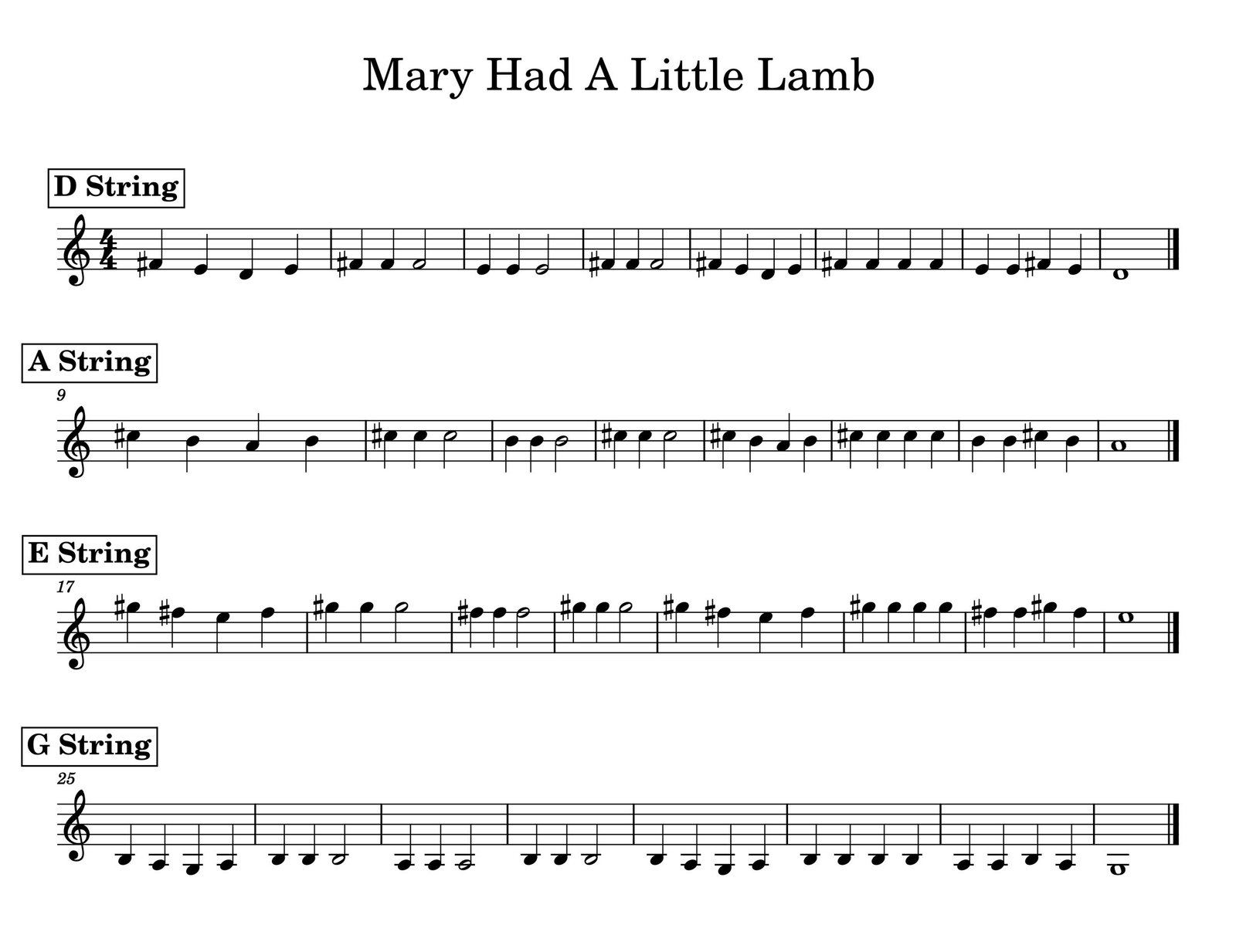
Now that you’ve built a solid foundation with your first position notes and a supportive practice routine, it’s time to apply those skills to some real music! The journey from scales to songs is one of the most rewarding parts of learning the violin. The following selections are chosen for their beautiful melodies, beginner-friendly structures, and the specific techniques they help you develop. Remember, the goal isn’t perfection, but progress and joy.
Traditional and Folk Songs
These tunes have stood the test of time for a reason. Their familiar melodies are often simple and repetitive, making them perfect for building confidence.
Greensleeves (What Child Is This)
- Historical significance as 16th century English folk song: This piece connects you to centuries of musical tradition. Its poignant melody is recognizable worldwide, which can make learning it feel especially rewarding.
- Simple melody ideal for bowing technique practice: The slow, lyrical pace allows you to focus entirely on producing a smooth, beautiful tone with your bow. It’s a perfect piece to practice long, sustained bows and controlled bow changes.
- Opportunity to focus on finger placement and dynamics: The tune moves stepwise for the most part, letting you concentrate on accurate finger placement. It also naturally invites you to experiment with soft (piano) and loud (forte) sections, introducing you to musical expression.
El Condor Pasa
- Traditional Andean folk tune by Daniel Alomia Robles: This piece offers a beautiful introduction to music from a different part of the world, with a melody that is both haunting and serene.
- Basic rhythm patterns at manageable tempo: The rhythm is straightforward and steady, making it an excellent piece for practicing with your metronome. You can focus on keeping a consistent pulse without feeling rushed.
- Cultural significance as Peru’s second national anthem: Learning a piece of such national pride adds a layer of depth to your practice, reminding you of the power music has to represent a culture.
Classical Masterpieces Simplified
You might be surprised at how accessible famous classical pieces can be. These arrangements allow you to play the “greats” from the very beginning.
Minuet in G Major, BWV Anh. 114
- Originally attributed to Bach, actually by Christian Petzold: While long-believed to be by Bach, this piece remains a staple in beginner repertoire. Its elegant and balanced structure is a perfect introduction to classical style.
- Graceful melody in G major with easy bowing patterns: Being in G Major, it uses the finger pattern you’re already familiar with (including that F#!). The bowing patterns are generally simple, often using separate bows, which helps build clean articulation.
- Excellent for phrasing and musical expression development: This minuet is made of clear, musical sentences. Learning to shape these phrases—making them sound like a conversation rather than just a series of notes—is a fantastic next step in your musical journey.
The Four Seasons ‘Spring’ – I. Allegro by Vivaldi
- Baroque era masterpiece adapted for beginners: Now you can play one of the most famous themes in all of classical music! Beginner arrangements capture the joyful essence of the original.
- Two variations: semibreves and crotchets: Many arrangements offer a simplified version with long, whole notes (semibreves) to help you learn the pitch sequence, followed by a more rhythmic version with quarter notes (crotchets) to develop tempo.
- Joyful introduction to orchestral accompaniment: Playing this piece, even in a simple form, makes you part of a grand tradition. It’s incredibly motivating to play a melody you’ve likely heard in films, commercials, and concert halls.
Aquarium from Carnival of the Animals
- Camille Saint-Saëns’ underwater-inspired movement: This piece is less about technical display and more about creating a specific, magical atmosphere. It’s ethereal and beautiful.
- Perfect for practising phrasing and dynamics: The entire piece is a lesson in control. It requires a very smooth legato bow and careful attention to soft dynamics to create its “underwater” shimmering effect.
- Mesmerizing melody with piano accompaniment: If you have a chance to play with a pianist, this piece is a dream. The violin melody floats over the piano’s arpeggios, teaching you how to listen and blend with another musician.
Modern and Popular Selections
Playing music you already know and love from popular culture can be a huge motivator and a lot of fun.
Theme from Game of Thrones
- Ramin Djawadi’s epic television theme: This piece brings a dramatic, cinematic flair to your practice sessions. It feels impressive to play, even in a beginner-friendly key.
- Minor key arrangement with repetitive patterns: It introduces you to the distinct sound of a minor key, broadening your musical palette. The thematic motifs are often repeated, which simplifies the learning process.
- Introduction to contemporary repertoire: It bridges the gap between “practice” and the music you enjoy in your daily life, showing that the violin is a versatile and modern instrument.
The Blue Danube by Johann Strauss II
- World-famous waltz adapted for beginners: This waltz is the epitome of elegance and grace. An arrangement for beginners captures its flowing, uplifting spirit.
- Uplifting and optimistic melody: The melody itself is so cheerful that it can make practice feel like a celebration. It’s a wonderful piece for lifting your spirits.
- Excellent for tempo control practice: As a waltz, it’s in 3/4 time. This helps you internalize a different rhythmic feel than the common 4/4, focusing on the strong “ONE-two-three” pulse.
Holiday and Seasonal Favorites
Seasonal music is wonderful to learn as a special project, giving you a tangible goal and a piece to share with family and friends.
Silent Night
- Christmas classic with smooth, lyrical melody: Much like Greensleeves, this piece is perfect for focusing on a beautiful, controlled tone. Its slow tempo is forgiving and allows you to think about every note.
- Bow distribution and control development: You learn to plan your bow usage, using the full bow for long notes and a smaller amount for shorter notes, all while maintaining a consistent sound.
- Fourth finger stretching opportunities: In some arrangements, the melody may require the use of your fourth finger (pinky) to reach a high note, providing a gentle and musical way to strengthen it.
Auld Lang Syne
- New Year’s favorite in simple key signature: This is another fantastic, slow-paced melody that is harmonically very simple, often using just a few notes.
- Repeated rhythmic patterns throughout: The “dotted quarter-eighth note” rhythm is a classic pattern that appears frequently in music. Mastering it in this familiar tune sets you up for success in more complex pieces.
- Slow tempo ideal for bow usage practice: The stately pace allows you to focus on coordinating your left-hand fingers with your right-hand bow, ensuring they move together perfectly.
Fiddle Tunes and Irish Music
This genre is all about energy, rhythm, and fun. It’s a fantastic way to develop a crisp, clean sound and a solid sense of pulse.
Boil Them Cabbage Down
- Fun folk song using only three fingers initially: Many versions of this American fiddle tune can be played using only your first, second, and third fingers, making it accessible very early on.
- Room for adding double stops and ornaments: As you advance, this tune is a great vehicle for adding simple double stops (playing two strings at once) and trills or slides, introducing you to the world of ornamentation.
- Impressive sound at faster tempos: While you start slowly, the ultimate goal is to play this tune with spirit and speed. It’s incredibly satisfying to feel yourself getting faster and cleaner over time.
Irish Washerwoman
- Classic Irish jig in 6/8 time signature: This piece is a whirlwind of energy! The 6/8 time signature has a lively, “jigging” feel that is distinct and fun to play.
- G major key with consistent finger pattern: Its home key is G Major, so you’re working within a familiar scale pattern, allowing you to focus on mastering the unique rhythm.
- Upbeat tempo for rhythm development: This tune is a ultimate workout for your rhythmic precision. It will challenge you to keep your notes even and your tempo rock-solid, greatly improving your overall technical control.




No comment