
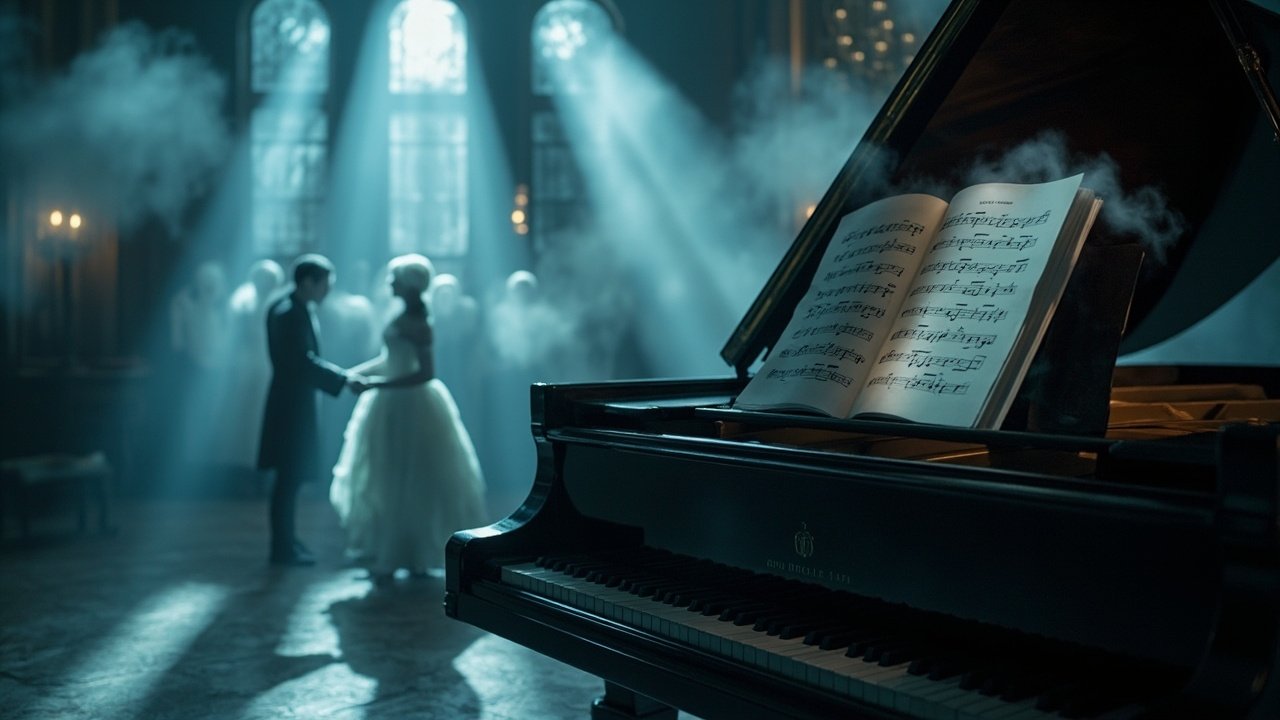
What if a single melody could bridge a century, connecting modern pianists to the lost world of Imperial Russia? ‘Once Upon a December’ from Anastasia achieves this, its sheet music serving as a portal to a poignant past. This piece, inspired by authentic Russian folk motifs, transcends its animated origins to become a timeless Broadway ballad. Our guide unlocks the technical and emotional secrets embedded in its notes, empowering you to master this iconic composition. Discover how its 3/4 waltz rhythm and evocative chord progressions create an unforgettable, spectral atmosphere at the piano.
【The Ghost in the Music: Unlocking Anastasia’s Memory】
The Song That Survived Revolution
Historical Context of the Composition
The melody of “Once Upon a December” feels like it was unearthed from a long-sealed trunk, smelling of mothballs and lost time. Stephen Flaherty didn’t just compose it; he channeled a ghost. His inspiration was drawn deeply from the well of Russian folk melodies—those mournful, sweeping tunes that speak of vast snowfields and a deep, communal sorrow. He wove these ancient musical threads into the song’s DNA, creating a piece that feels authentically old, a relic from a world that no longer exists.
This was all in service of the Romanov family mythology, that haunting 20th-century fairy tale of a dynasty brutally erased, yet with the persistent, romantic whisper of survival in the form of the young Grand Duchess Anastasia. The song walks a delicate line between historical accuracy and the potent myth. It doesn’t narrate facts, but rather captures the emotional truth of a lost era, the collective memory of a glittering past that was violently dismantled. It was the 1997 animated film that first gave this ghost its voice, embedding the song so deeply into the cultural consciousness that it became the undeniable, beating heart of the subsequent Broadway musical adaptation in 2025. The stage production leaned into this, using the melody as a recurring musical motif, a ghost that Anya hears both in her dreams and in the bustling streets of Paris, a siren song calling her home.
Why This Melody Haunts Piano Players
Emotional Resonance in Musical Structure
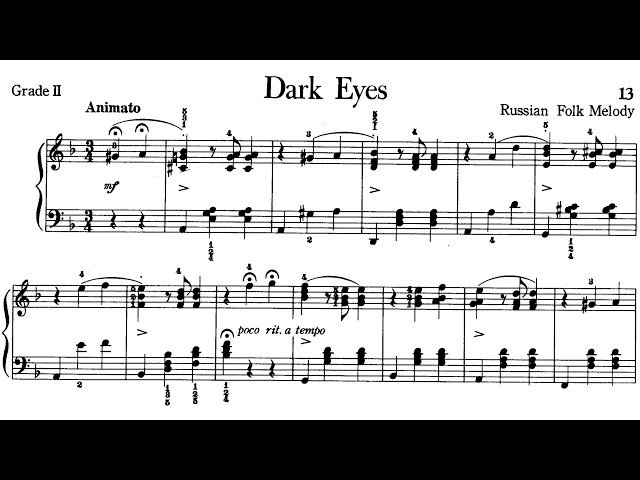
There’s a reason this particular sheet music, whether the easy arrangement or the haunting original, lays claim to a pianist’s fingers and doesn’t let go. It’s not just a song you play; it’s a memory you inhabit. The 3/4 waltz rhythm is the first key to its power—it’s the rhythm of a formal ball, of spinning in a grand hall, a rhythm intrinsically linked to nostalgia and a time forever gone. Your left hand becomes the steady, graceful turn of the dancers, while your right hand traces the melancholic melody.
Then come the chord progressions, simple yet devastating. They move with a solemn, processional gravity, each change feeling inevitable and sorrowful. But the true ghost in this machine is the shift from a somber minor key to a fleeting, luminous major key at the moment of lyrical revelation—”Dancing bears, painted wings.” This is the musical equivalent of a sunbeam breaking through storm clouds for just a second, illuminating a cherished memory before the clouds gather once more. It’s a psychological masterstroke, making the return to the minor verse feel like a descent back into the cold present.
When placed beside other Broadway piano ballads, its haunting quality becomes even more pronounced.
| Ballad | Core Emotional Driver | “Once Upon a December” Contrast |
|---|---|---|
| “Memory” (Cats) | Theatrical desperation and yearning | More intimate, a private memory vs. a public lament |
| “Corner of the Sky” (Pippin) | Upbeat, searching ambition | Inward-looking nostalgia vs. outward-looking quest |
| “I Dreamed a Dream” (Les Mis) | Anguished, raw tragedy | A gentle, aching sorrow vs. a torrent of despair |
It’s this unique combination of a dance from the past, a melody that speaks of loss, and a harmonic structure that flickers with forgotten joy that ensures this piece continues to haunt anyone who sits before the keys. For those feeling the pull of this memory, the journey begins with the notes on the page. You can find the gateway to this ghost, the once upon a december sheet music (Easy & Original PDF),Click to download the sheet music for Once Upon a December
【Sheet Music Archaeology: Finding the Real PDF】
【Piano Arrangements Demystified: From Beginner to Virtuoso】

Easy Piano Magic: Making Complex Music Accessible
Technical Breakdown of Simplified Versions
The easy piano arrangement, like the one by Rebecca Belliston, feels like a memory recalled in the soft, forgiving light of a winter morning. It is designed not to intimidate, but to welcome. The magic is in how it pares down the composition to its essential, beating heart without breaking its spectral spell. The most significant technical concession is the reduced hand position changes for beginner piano sheet music. Where the original demands wide, stretching reaches across the ivory keys, the simplified version keeps the hands nestled close together, often within a single five-finger position. This allows the player to focus on the haunting melody itself, rather than the acrobatics required to produce it.
Yet, the arrangement masterfully maintained melodic integrity while simplifying accompaniment. The right hand carries the familiar, wistful tune almost entirely intact—the soul of the piece remains untouched. The left hand, however, is transformed. The full, rolling waltz accompaniment is distilled into solid, block chords or simple broken patterns. This creates the harmonic foundation without the technical complexity, allowing the melody to sing clearly above it. A comparison of the two approaches reveals the core design philosophy:
| Aspect | Five-Finger Piano / Simplified Arrangement | Full Original Arrangement |
|---|---|---|
| Hand Span | Narrow, centered around Middle C | Wide, requiring stretches of an octave or more |
| Left Hand | Solid chords or simple broken patterns | Fluid, continuous waltz-style arpeggios |
| Rhythm | Simplified, steady quarter and half notes | Complex, syncopated waltz rhythm (3/4 time) |
| Musical Texture | Melody with harmonic support | Rich, interweaving melodic and accompaniment lines |
Intermediate Challenges for Growing Musicians
Progressive Learning Pathways
For the pianist who has befriended the easy version, the original sheet music waits like a door at the end of a long hallway, promising a deeper, more complete communion with the ghost. The transition is a journey of adding layers, of learning to breathe life into the notes. The first and most profound step is adding left-hand arpeggios to basic chord structures. This is where the music begins to flow. The static block chords of the beginner version must learn to undulate, to become the steady, turning waltz that cradles Anya’s memory. The left hand ceases to be mere support and becomes the very engine of the piece, a hypnotic, circular motion that evokes a music box spinning slowly to life.
Then comes the true summoning: the dynamic expression markings for emotional piano ballads. The sheet music is no longer just a map of notes, but a script of feelings. The markings piano (soft) and mezzo-forte (moderately loud) are not mere volume instructions; they are emotional cues. The crescendo into the chorus is the memory surging forth with sudden, painful clarity. The delicate pianissimo of the interlude is the ghost fading, becoming translucent again. Mastering these shifts in intensity is what separates playing the notes from telling the story. Finally, one must grapple with the tempo variation techniques from 60-70 BPM. The piece is not a metronome; it breathes. It hesitates on the introduction, as if the memory is fragile and might break. It pushes forward slightly with the strength of the chorus, and then relaxes again. This subtle ebb and flow, this rubato, is the final, crucial ingredient for a performance that feels less like a recital and more like a recollection. For those ready to take this step, the complete and official once upon a december sheet music (Easy & Original PDF) that guides you from a simple whisper to a full, Click to download the sheet music for Once Upon a December
【The Anastasia Soundtrack Legacy: Beyond the Movie】
From Screen to Stage: Evolution of a Classic
Broadway Adaptation Musical Changes
The journey from animated spectacle to live Broadway stage in 2025 was not a simple translation; it was a resurrection, a deepening of the spectral world we had only glimpsed on screen. The most profound change was the expanded musical themes in stage production. Composer Stephen Flaherty took the haunting leitmotifs from the film and wove them into a richer, more complex tapestry. The simple, elegant melody of “Once Upon a December” was no longer confined to a single music box; it became a ghost that haunted the entire score, appearing in overtures, scene transitions, and reprises, binding the narrative together with its melancholic thread. It was a memory that refused to stay buried, echoing through the halls of the narrative.
This expansion was fueled by the additional Stephen Flaherty music composed for the theatrical run. Dozens of new songs were born, fleshing out characters and plotlines that the film could only hint at. These new compositions shared a musical DNA with the original soundtrack, creating a cohesive world where the new felt familiar and the familiar felt newly discovered. When we place this evolution beside the world of Disney piano music arrangements, a key difference emerges. While Disney’s stage adaptations often faithfully recreate the film’s iconic numbers, Anastasia on Broadway felt less like a replica and more like an excavation, unearthing new layers of the story from the very same musical soil. The sheet music for the stage version is consequently denser, more orchestral in its piano reductions, demanding a greater command of the keyboard to capture its theatrical scope.
Country Ballads Connection: Unexpected Musical Cousins
Deana Carter’s Interpretation and Influence
It’s a strange alchemy, how a song about Russian royalty can find a kindred spirit in the dusty backroads of American country music, but memory and loss are universal languages. The country music elements in movie musical scores are often subtle—a certain chord progression, a lyrical directness, a focus on storytelling—and they create a bridge to other genres. “Once Upon a December,” in its core construction, shares this narrative heart. It’s a ballad of longing for a home and a past that’s just out of reach, a theme that resonates deeply within the country tradition.
This connection becomes startlingly clear when you draw a comparative analysis with Strawberry Wine and other country piano ballads. Listen to Deana Carter’s “Strawberry Wine.” It’s a different vintage, to be sure, but it intoxicates with the same powerful spirit of nostalgia. Both songs are wistful recollections, framed by a piano that provides a gentle, rolling foundation. The piano in “Strawberry Wine” doesn’t just accompany; it paints—the golden light of a late summer afternoon, the bittersweet ache of a first love remembered. This is the same technique employed in evocative piano arrangements of “Once Upon a December,” where the left hand’s waltz isn’t just rhythm, but the turning of a memory. This shared approach highlights the power of narrative storytelling through piano arrangements, where the instrument becomes the narrator, using dynamics, tempo, and texture to convey a story as clearly as any lyric. For pianists looking to explore this blend of cinematic grandeur and country-storytelling intimacy, the definitive resource for the piece that started it all, the once upon a december sheet music (Easy & Original PDF), is available at https://www.letsplaypianocc.com/product/once-upon-a-december-sheet-music/
【Practice Room Secrets: Mastering This Emotional Piece】
Technical Exercises for Perfect Performance
Building Necessary Piano Skills
The sheet music, whether the easy arrangement or the dense original, presents a ghost that must be conjured, not merely played. The first spirit to summon is the rhythm. The piece is a memory in three-quarter time, and to make it breathe, you must internalize its pulse. Begin with waltz rhythm practice drills for recital piano pieces. Practice the core “OOM-pah-pah” pattern away from the piano, tapping it on your knees—a heavy, grounding first beat followed by two lighter, almost hesitant beats. This isn’t a Viennese ballroom waltz; it’s a ghost waltz, a memory of a dance. When you transfer this to the keyboard, start by playing only the root notes of the chords on beat one, and simple double notes or intervals on beats two and three, ignoring the melody entirely. Let your body learn the sway before your fingers learn the song.
This leads directly to the foundation of the entire piece: the left-hand bass pattern exercises from free piano sheet music. The left hand is the echo in the empty ballroom, the footsteps of a memory. Isolate it. Play the waltz pattern slowly, focusing on a smooth, connected sound between the bass note and the subsequent chords. The challenge is to make this pattern feel inevitable and hypnotic, not mechanical. Use a metronome to build consistency, but then hide the click, allowing the pattern to flow with a subtle, human ebb and flow. This steady, haunting foundation is what allows the right-hand melody to float and yearn above it.
Finally, you must master the art of the veil—the pedaling techniques for sustained emotional atmosphere. The sustain pedal is not a simple on/off switch here; it is the blur between the past and the present. For the original version, the technique is often a “washy” pedal, changed on the first beat of every new harmony to create a dreamy, resonant soundscape without muddying the harmonies. For the easier arrangements, the goal is the same: to connect the chords seamlessly, allowing the sound to linger like a fading thought. Practice playing a single phrase, focusing solely on clear, clean pedal changes that sustain the mood without clogging the musical texture. It is this atmospheric haze that transforms notes on a page into a poignant recollection.
Interpretation and Expression Guidelines
Creating Nostalgic Atmosphere
With the technical skeleton in place, you must now clothe it in the flesh of feeling. The most powerful tool at your disposal is dynamic shaping for maximum emotional impact. The piece should rarely, if ever, be played at a uniform volume. Approach the main melodic phrases like a storyteller leaning in to share a secret. Begin phrases at a piano or mezzo-piano, swelling gently toward the middle of the phrase as the memory becomes vivid, then receding again as it fades. This push and pull is the breath of the piece. A sudden, gentle accent on a harmonically rich chord can feel like a stab of painful clarity amidst the hazy remembrance.
This breathing is intimately tied to rubato application without losing musical structure. Rubato—”stolen time”—is the heart of nostalgia. You can slightly hesitate before a poignant note, or rush gently through a ascending scale passage as if chasing the memory. The crucial anchor is the left hand. While the right-hand melody can stretch and contract with emotion, the left hand’s waltz pattern must remain the steady, unwavering heartbeat of the piece. It is the anchor in the present from which the melody can safely travel into the past. Steal time, but always pay it back, returning to the fundamental pulse so the listener never feels lost.
Ultimately, this is all in service of personal storytelling through musical phrasing. You are not just playing notes; you are recounting a story. Think of what the phrases mean. Is this phrase a question? Play it with a slight lift. Is it a resigned statement? Let it diminish and fade. The small, swirling grace notes and turns in the melody are not mere ornamentation; they are the intricate filigree on a faded photograph. Lean into them, give them space to speak. Imagine the scenes, the faces, the lost world as you play. Let that internal narrative guide your hands, and the music will cease to be an exercise and become an evocation. To begin your own journey into this haunting ballad, the foundational resource for every pianist, the definitive once upon a december sheet music (Easy & Original PDF), Click to download the sheet music for Once Upon a December
【Digital Resources Revolution: PDFs and Beyond】
Sourcing Quality Sheet Music
In this new, vast digital library, however, not all spirits are friendly. The internet is a haunted mansion filled with both treasures and traps. The first and most crucial distinction lies between verified publishers versus user-uploaded content. A PDF from a reputable publisher like Hal Leonard or Musicnotes is a clean, accurate transcription, its notation crisp, its formatting designed for clarity at the piano. The user-uploaded version on a free forum, however, might be a ghost of a ghost—a scan of a photocopy, with smudged notations, missing measure lines, or even wrong notes that will lead you astray. You are not just learning a piece; you are building a memory. You do not want a corrupted one.
Therefore, understanding PDF music downloads quality standards is essential. A high-quality PDF is a vector-based file, which means you can zoom in to 400% without a single pixelated note. The file size will be reasonable, not impossibly small. It will include proper copyright information and, often, helpful fingering suggestions from a professional editor. A poor-quality PDF is often a simple image file—a blurry JPEG disguised as a document. It is the difference between looking through a clean window into the past and peering through a frosted, distorted pane of glass.
【From Practice to Performance: Sharing Your Music】

The Continuing Musical Journey
Next Steps After Mastering This Piece
When the final, gentle chord of “Once Upon a December” feels as natural as breathing, a doorway has been opened, not a destination reached. The skills you’ve honed—sensitive pedaling, shaping a lyrical melody, maintaining a steady left-hand accompaniment—are your keys to a wider world. The logical progression is toward intermediate piano scores that share its lyrical and atmospheric qualities. Pieces like Yiruma’s “River Flows in You” or Einaudi’s “Nuvole Bianche” offer a similar emotional landscape while introducing new rhythmic and harmonic challenges.
Your journey with this piece has also given you a deep connection to the power of broader movie soundtrack arrangements. The cinema is a treasure trove for the modern pianist. You could seek out the poignant themes from Up or the magical wonder of the Harry Potter scores. Each film soundtrack piece is a story, and you have already learned the first language of how to tell it at the keyboard. The search for your next piece will feel different now; you’ll be listening for that same core of emotional truth you found in your first PDF.

)
No comment