
Have you ever wondered why ‘City of Stars’ from La La Land resonates so deeply with millions worldwide? This modern classic captivates not through complexity, but through its profound emotional simplicity and warm F Major foundation, making it uniquely accessible for pianists of all levels. Our definitive guide unlocks the musical architecture of this beautiful piece, providing everything from chord progression analysis to tailored practice frameworks that transform beginners into expressive performers. Discover how to master both the easy and original arrangements, allowing you to progress from playing notes to creating genuine musical storytelling at your piano.
【Your Journey to the Stars Begins Now】

Why This Song Captivates Millions
The Universal Appeal of a Modern Classic
The magic of “City of Stars” lies not in its complexity, but in its profound simplicity. Its melodic structure is a masterclass in saying much with little; a gentle, ascending motif that feels both hopeful and wistful, mirroring the very dreams and doubts the song lyrically explores. This is a melody that, once heard, takes up residence in your soul.
A significant part of this emotional resonance is rooted in its key signature: F Major. This key is often described as warm, pastoral, and full of a calm, benevolent joy. It’s a key that feels like a gentle embrace, perfectly framing the song’s tender dialogue between the characters. Justin Hurwitz, the composer, performs a kind of alchemy here. He bridges the timeless, emotive quality of classical composition—think of its clear, song-like melody that wouldn’t be out of place in a Chopin nocturne—with the accessible, conversational phrasing of contemporary pop and film music. It feels both familiar and fresh, a modern classic in the truest sense.
From Silver Screen to Your Piano Bench
There is a unique journey that a piece of music takes when it leaves the grandeur of a cinematic soundtrack and finds its way onto the humble piano bench in your living room. The arrangement transforms from an orchestral element into a personal conversation between you and the instrument. This is why both beginners and seasoned players find such joy in this piece. For the beginner, it’s the thrill of being able to recreate a beautiful, recognizable melody relatively quickly. For the experienced player, it’s an opportunity to imbue a simple structure with nuance and personal feeling, to tell a story with touch and dynamics.
This act of playing recognizable movie music carries profound psychological benefits. It’s not just an exercise in finger placement; it’s an act of connection. You are not just playing notes; you are invoking a feeling, a memory, a scene. It allows you to step into the world of the film and, for a few minutes, become a part of its magic. This emotional engagement makes practice feel less like work and more like play, fueling your motivation to continue.
Finding Your Perfect Sheet Music Match
Decoding Difficulty Levels: Easy vs. Original
Choosing the right arrangement is the first step in making this song your own. The distinction between “Easy” and “Original” versions is crucial for a positive and rewarding learning experience.
| Feature | Easy Arrangement | Original Arrangement |
|---|---|---|
| Note Complexity | Primarily uses simple quarter and half notes within a single staff position. Chords may be simplified or arpeggiated. | Features more complex rhythms, including syncopation, and fuller chord voicings that require wider hand spans. |
| Hand Positioning | Often keeps the hands in a comfortable, fixed “five-finger” position, with minimal movement or jumps. | Requires more independent hand movement, with the left hand covering a wider range to provide a richer harmonic bass line. |
| Tempo | Often played at a slower, more manageable tempo, allowing time to find the notes. | Aims for the original cinematic tempo of approximately q=104, which demands greater finger agility and control. |
PDF Quality and Readability Factors
In the digital age, the quality of your sheet music PDF is as important as the arrangement itself. A poorly transcribed score can create unnecessary obstacles, while a clean, professional one makes the learning process smooth and enjoyable.
When you search for your “City of Stars” piano sheet music, pay attention to the page count. A simplified version might be a very manageable 3 pages, reducing the cognitive load of page turns for a beginner. The original version is typically 4 pages, offering a more complete and developed musical narrative.
Look for PDFs that prioritize notation clarity. This includes:
- Well-spaced measures that aren’t crammed together.
- Clear, large-enough note heads.
- Unambiguous dynamic markings (like piano and forte) and articulation (like slurs and staccatos).
Finally, consider your practice setup. Will you be printing the PDF or reading from a tablet? For printing, ensure the margins are adequate. For digital use, a high-resolution file that remains clear when zoomed in is essential for those moments when you need to scrutinize a specific measure. Finding a high-quality PDF means you can focus entirely on the music, not on deciphering it.
Your journey to playing this beautiful piece is just a click away. To help you start, we have sourced a beautifully arranged, crystal-clear City of Stars piano sheet music (Easy & Original PDF) that perfectly balances authenticity with playability.
- Product: City of Stars – Piano Sheet Music (Easy & Original Versions in one PDF)
- Link: Click to download
Mastering the Musical Architecture
Chord Progressions That Tell a Story
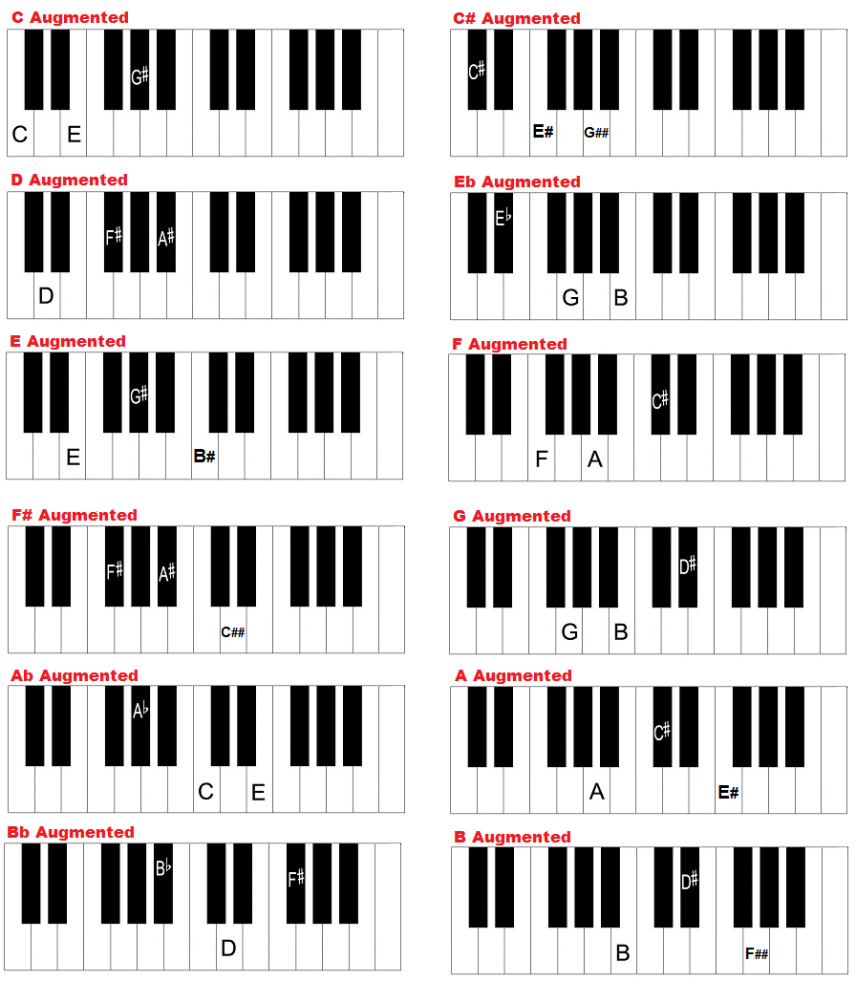
At the heart of the easy arrangement of “City of Stars” lies a deceptively simple chord progression. It is built upon the sturdy pillars of the F Major scale, primarily using the chords F, Bb, C, and Dm. This is the I-IV-V-vi progression, a sequence that has underpinned countless stories in music because it feels both resolved and yearning. The F Major chord is your musical home, the “city” itself. The Bb (the IV chord) offers a gentle lift, a hopeful glance upward. The C (the V chord) creates a tension that pulls you irresistibly back home, while the Dm (the vi chord) provides that touch of sweet melancholy, the “Is this the start of something wonderful and new?” doubt.
This harmony is the invisible hand that supports the emotional narrative. When you play these chords, you are not just pressing keys; you are building the emotional landscape of the song. The stability of F Major grounds the dream, the lift of Bb gives it wings, and the gentle sigh of Dm makes it feel beautifully, humanly real.
To practice these transitions smoothly, try this:
- Play the progression in blocked chords, very slowly: F – Bb – C – Dm. Focus on moving your hand as a single unit, finding the new shape before you need to play it.
- Once that feels comfortable, break the chords into simple, repeating arpeggios. This is how they often appear in the easy arrangement, and it immediately makes your playing sound more fluid and musical.
Rhythmic Patterns That Create Magic
The rhythm of “City of Stars” is its heartbeat. In the original film version, there is a subtle, gentle swing feel—a lilt that makes the melody sway like a couple dancing under the stars. For beginners, playing with a straight rhythm is a perfectly valid and beautiful starting point. It allows you to focus on note accuracy and the raw melody.
As you grow more comfortable, you can begin to introduce that magical swing. Think of it as “tripletizing” the pairs of eighth notes; instead of two equal notes, you play the first slightly longer and the second slightly shorter. Don’t overdo it; a hint is all you need.
A fundamental counting exercise is to use a metronome set to a slow pace, perhaps q=80. Count “1-and-2-and-3-and-4-and” out loud as you play, ensuring every note lands precisely in its place. This builds the internal clock that will allow you to maintain a consistent, hypnotic tempo, which is essential for the song’s dreamy character. For advanced players exploring the original arrangement, listen for the subtle syncopation—accents on the “and” of a beat—that gives the piece its sophisticated, jazzy lift.
Technical Challenges and Solutions
Navigating the Melodic Line
The iconic melody of “City of Stars” is a singer’s melody, and your right hand must learn to sing on the piano. The finger positioning is generally straightforward, often resting comfortably within a five-finger pattern. The key is to use a curved, relaxed hand and to favor the stronger fingers (2, 3, and the thumb) for the primary melodic notes to ensure a warm, consistent tone.
A beautiful characteristic of this piece is its duet-like quality, where the right hand carries the main tune and the left hand provides a responsive, conversational arpeggio. A simple hand coordination exercise is to practice each hand alone until it’s automatic. Then, play them together at an extremely slow tempo, not to make music, but simply to witness how the parts lock together. Your brain will gradually map the connection, and the speed will naturally follow.
To truly capture the vocal quality, think in phrases, not in individual notes. A phrase is a musical sentence. Play each ascending line with a gentle crescendo, as if asking a question, and let the resolving notes soften, as if sighing with an answer.
Dynamic Expression Made Simple
Dynamics are the soul of this piece. The difference between just playing the notes and making music lies in your control of volume. A simple strategy for emotional impact is to follow this emotional map: play the verses softly (piano), as an intimate confession, and allow the chorus to swell gently to a medium volume (mezzo-forte), like a heart filling with hope.
Pedaling is what gives the piece its atmospheric, dreamy shimmer. For most players, a good rule of thumb is to change the sustain pedal with each harmonic change—typically with each new chord. Press the pedal down as you play the chord and lift it briefly to clear the sound before pressing it again for the next chord. This “legato pedaling” connects the harmonies without blurring them into a muddy mess.
Finally, pay attention to articulation. The slurs that connect groups of notes indicate a smooth, connected line (legato). Strive to make these passages flow like water. In contrast, the occasional staccato dot calls for a short, detached note—a little musical punctuation that adds character and clarity. This thoughtful touch is what transforms a rendition from correct to captivating.
Your journey to internalizing this beautiful piece is a path of both technical practice and emotional discovery. To support your practice with the clearest guide, we recommend the City of Stars piano sheet music (Easy & Original PDF), which provides detailed notations for all these techniques.
- Product: City of Stars – Piano Sheet Music (Easy & Original Versions in one PDF)
- Link: Click to download
Practice Strategies That Actually Work
Building Your Foundation
The 15-Minute Daily Practice Framework
Time is not the enemy of progress; inconsistency is. A brief, focused daily practice is infinitely more powerful than a long, meandering session once a week. Here is a simple, sustainable 15-minute framework designed specifically for “City of Stars.”
| Time | Focus | Activity |
|---|---|---|
| 3 mins | Warm-up | Play the F Major scale and the core chord progression (F – Bb – C – Dm) slowly, focusing on a relaxed hand shape and clear tone. |
| 8 mins | Section Mastery | Isolate one 2-4 measure phrase. Practice hands separately, then together, at a painfully slow tempo until it feels easy. |
| 4 mins | Play-Through | Play the entire piece from start to finish, without stopping, at a slow tempo. This is for building flow and endurance, not perfection. |
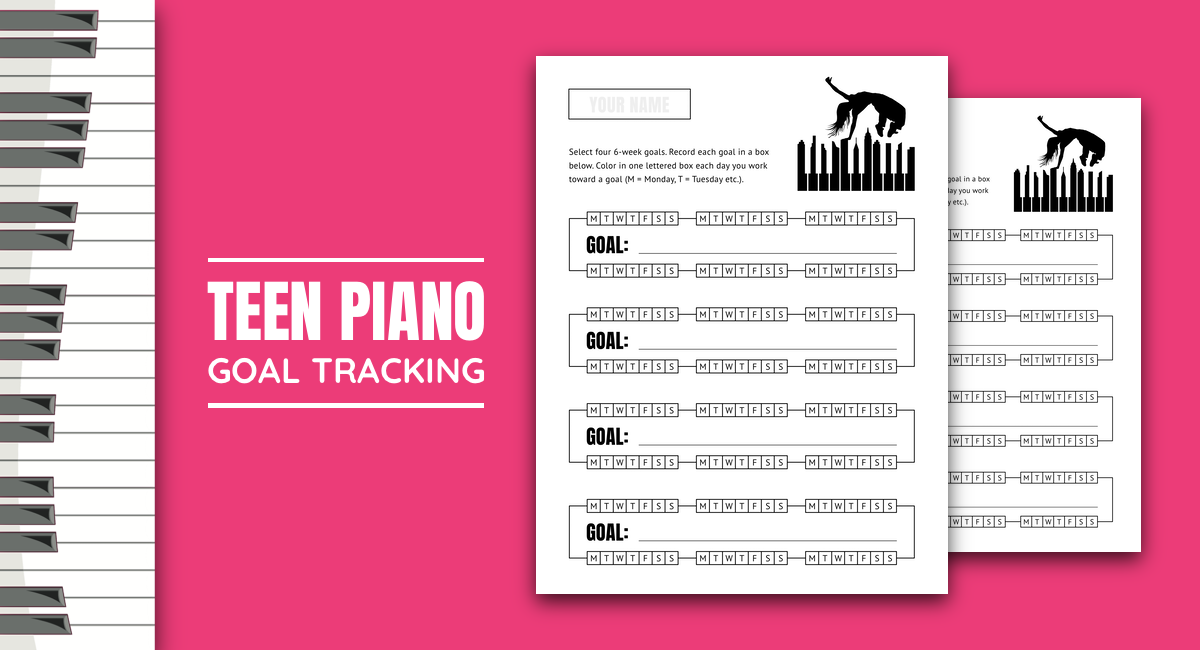
The secret to the section-by-section approach is what I call “micro-mastery.” Don’t move on from a phrase until you can play it three times in a row without a single mistake. This builds not just muscle memory, but confidence memory. For tracking, forget complex charts. A simple notebook where you check off the phrases you’ve mastered each day is a powerful visual testament to your progress. Watching that collection of checkmarks grow is a profound motivator.
Common Beginner Mistakes and How to Fix Them
We all stumble over the same stones on a new path. Recognizing them is half the battle.
- Rhythm Inaccuracies: The most common issue is rushing the steady, dreamy pace. The melody wants to linger; we often push it forward. The cure is to subdivide. Use your metronome, but instead of just listening for the click, vocalize “1-and-2-and-3-and-4-and” along with it. This forces your brain to acknowledge the space between the beats, which is where the rhythm truly lives.
- Hand Coordination Challenges: The feeling that your hands are two independent, uncooperative entities is universal. The solution is not just slow practice, but deliberate disassembly. Practice playing the left-hand arpeggio pattern once, then hold the chord while you play the entire right-hand melodic phrase for that measure. This teaches your ears and hands how the two parts harmonically fit together before you tackle the complex task of playing them in simultaneous motion.
- Musical Expression Barriers: The mistake is trying to add expression as a final “coat of paint.” Expression is the clay itself, not the glaze. From the very first day you learn a phrase, play it with a whispered softness. When you learn the chorus, play it with a little more breath in it. Bake the feeling into the notes from the beginning, and it will never feel artificial or forced.
From Notes to Music
Developing Your Interpretation
To play the notes correctly is a technical achievement. To make the notes ache with longing and shimmer with hope is an artistic one. This is your journey from being a player to being a storyteller.
How do you make this piece your own while honoring its essence? First, know the story. Remember the scene: it’s a quiet, vulnerable moment of shared dreaming. Then, ask yourself questions as you play. “Where is the question in this phrase?” (Perhaps lean forward slightly, a gentle crescendo). “Where is the answer?” (Perhaps a softening, a slight ritardando). Your dynamics and phrasing are your tools for this storytelling. The simple act of deciding to make one particular note within a phrase just a little softer than the others is an act of profound personal interpretation.
Performance preparation is largely the act of making the environment irrelevant. Practice playing for the potted plant in the corner. Then play for a trusted friend. Record yourself. The goal is to become so comfortable with the map of the music in your fingers and your heart that even a flicker of nervousness cannot lead you astray.
Recording and Reviewing Your Progress
Your smartphone is one of the most powerful practice tools ever invented. Once a week, set it up and record a full play-through of “City of Stars.” Do not judge yourself while playing. Just play.
Then, and this is the crucial part, listen back. Be a compassionate teacher to yourself. What do you hear? Is the rhythm steady? Is the melody singing? Are the dynamics shaping the story? You will hear things you never notice while you are in the act of playing. This objective feedback is invaluable.
Set achievable milestones. Your first milestone is not “play perfectly.” It is “play from beginning to end without stopping.” Your next might be “successfully add pedal to the chorus,” or “play with consistent dynamics in the second verse.” Celebrate these victories. They are the real milestones on your artistic path. Each one is a testament to your courage to begin, and your persistence to continue.
This entire journey—from the first tentative notes to a confident, heartfelt performance—is built upon a clear and accurate roadmap. For that, having the right sheet music is essential. The City of Stars piano sheet music (Easy & Original PDF) we use provides that clarity, beautifully distinguishing the subtle nuances between the arrangements.
- Product: City of Stars – Piano Sheet Music (Easy & Original Versions in one PDF)
- Link:Click to download
Resources and Next Steps
Expanding Your Musical Universe
Beyond City of Stars: Similar Repertoire
Having learned “City of Stars,” you have built a specific and beautiful set of skills—a feel for gentle, flowing arpeggios and a melody that speaks of wistful dreams. This is not an endpoint, but a doorway. Your fingers now know a new language, and it’s a language spoken in many other beautiful pieces.
Consider this your invitation to explore further. The world of contemporary film music is rich with pieces that live in the same emotional neighborhood as “City of Stars” and are within your reach.
- Other Pieces from La La Land: Your journey with this soundtrack doesn’t have to end. “Mia & Sebastian’s Theme” is a natural next step, offering a slightly different but equally beautiful melancholic texture. “Audition (The Fools Who Dream)” presents a wonderful opportunity to work on building dynamic intensity and storytelling through a single, powerful melody line.
- Contemporary Film Music at a Similar Level: The pieces below share a similar technical and emotional DNA, perfect for building a cohesive and moving repertoire.
| Piece | Composer/Film | Why It’s a Great Next Step |
|---|---|---|
| “The Heart Asks Pleasure First” | Michael Nyman (The Piano) | Develops left-hand arpeggio patterns and the power of a repeating, hypnotic motif. |
| “Comptine d’un autre été” | Yann Tiersen (Amélie) | Focuses on a charming, music-box-like melody over a steady, simple bass line, excellent for hand independence. |
| “Main Title” | Ludovico Einaudi (The Intouchables) | Introduces you to Einaudi’s minimalist style, building emotional landscapes with repetitive, evolving patterns. |
| “Ori, Lost In the Storm” | Gareth Coker (Ori and the Blind Forest) | A modern video game piece that teaches how to create a immense sense of atmosphere and rising emotion. |
The goal is to build a repertoire that resonates with you. What stories do you want to tell with your fingers? What feelings do you wish to conjure? Choosing pieces that speak to your heart is what transforms practice from a discipline into a devotion.



)
No comment